

This article first appeared in a 2015 edition of Eclipse; the current version has been added to and modified.
Juno: the Consort, the Mate, the Woman in Charge by virtue of her position and status, a figure who should be listened to and respected, but who is repeatedly disrespected by her philandering spouse and ignored by others–hence her reputation for anger and vindictive displays. Who can blame her? No one likes being frustrated, which is why Juno’s magic comes from learning Self-empowerment, a condition where one doesn’t rely on others to feel effective in the world. Juno for a woman shows where and how she gains empowerment (through sign and aspects), with the sign opposite the one in which Juno sits giving hints about the kind of person with whom she’d like to mate (combine this with 7th House indicators for a more complete picture on the potential acceptable spouse–the 5th is for purely romantic considerations, and may not figure into mate selection at all). For women Juno’s front and center in terms of feeling one has an impact on one’s world and in how thoroughly one is in charge of one’s own Fate, and until she is determining her own Path, Juno may also show where a woman is being held back from that kind of Self-determination. For men it’s much more subtle, riding just below consciousness, and awareness of empowerment potentials. For both men and women Juno shows empowerment gained by personal effort and by status through association with other powerful entities; for men it further describes the kind of person seen as appropriate ‘mate’ material, especially in terms of the behaviors characteristic of the sign in which Juno sits. Typically men notice Juno most when they are seeking a spouse (and this is so no matter the sexual preference). Someone is assessed by the Juno standards, usually without too much conscious thought—they either strike him as appropriate to partner with or not. The keyword for reading Juno in the chart is ‘empowerment’, keeping in mind that this designates by aspect and transit where that struggle is occurring, or where we are trying to implement it, rather than guaranteeing the empowerment needs will be fulfilled there.
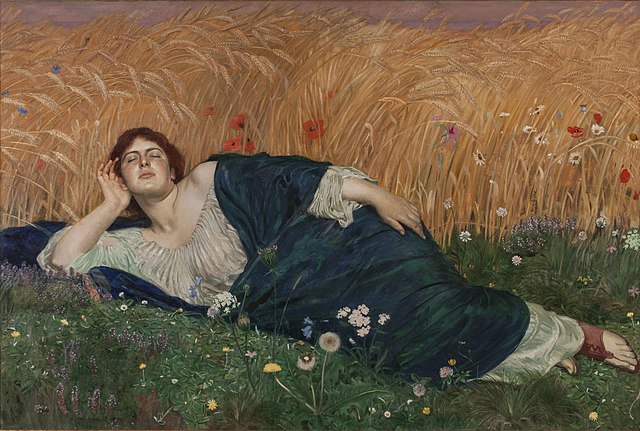
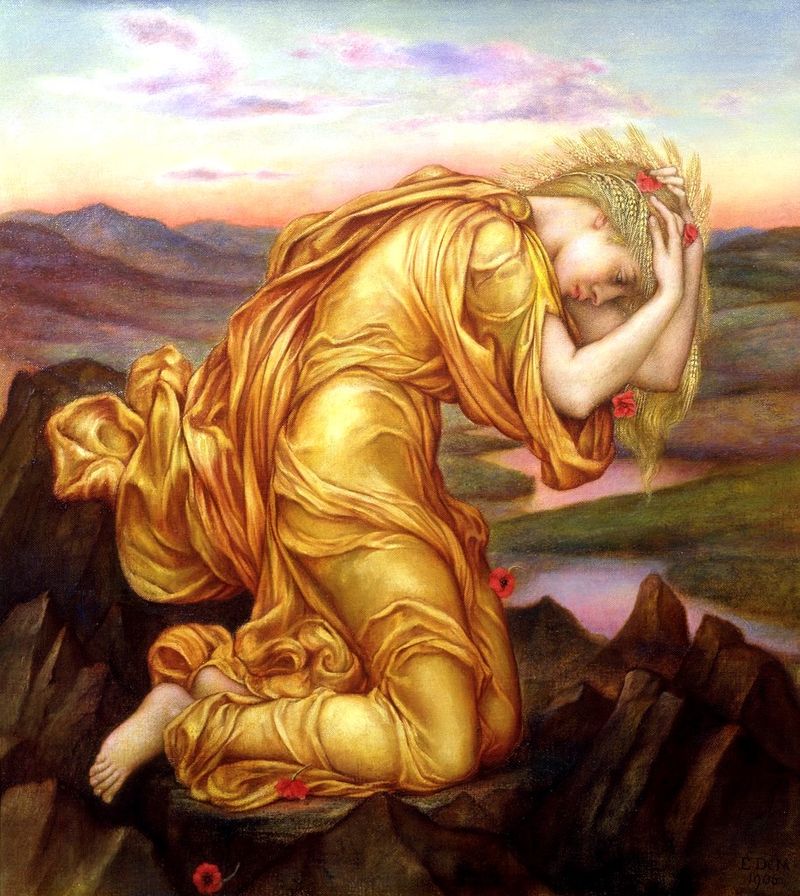
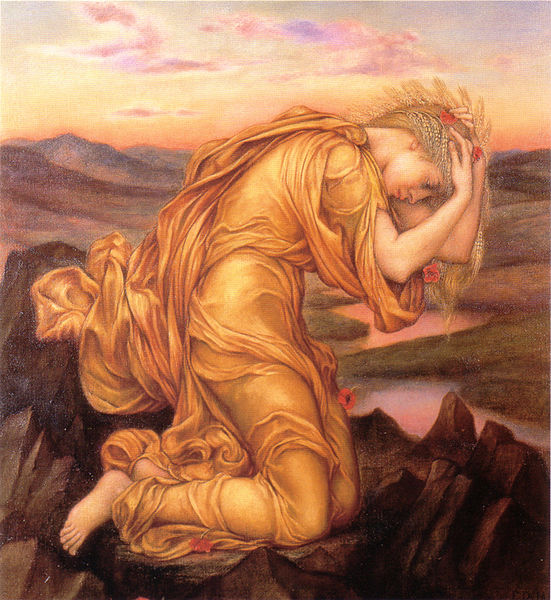
Ceres: she’s Mother Nature, but also every maternal figure (like the Moon), especially the ones who think they know best (not like the Moon), and she represents all growing things (though agriculture technically falls under Pallas–Ceres is instead Nature, with a capital ‘N’). Ceres is also all manner of negotiations, and generally every authority you’ve ever known who came by that authority as a given, a natural authority. Ceres has the life force itself behind her, giving her a source of power that drives all life on Earth–but such extreme power can also mean she fails to recognize the autonomy of others or their boundaries, overestimating both the reach of her authority and her rightful territory. The keywords for reading Ceres in the chart are ‘personal authority/ power’, though keeping in mind that the entity represented feels they have authority no matter what their actual position; also remember the potentials for the maternal influence (though it may only be a feeling or a ‘superior/ inferior’ relationship attitude), negotiation, and the over-stepping of boundaries, as well as health concerns centered on the body’s interaction with Nature (for instance, allergies).

Pallas: the child of Metis and Zeus, Metis being a Titan and representing ‘magical cunning’ (the original connotation of her name) and wisdom. She’s equal parts shrewdness and smarts, with a little dazzle thrown in (via the ‘Trickster’ label). It was foretold that Metis would have extremely powerful children, so as soon as Zeus and Metis got together, he began to worry. Zeus’ answer to all this was to trick Metis into turning into a fly, then swallowing her—what a guy! She was already pregnant with Pallas Athena, and began to create her child’s armor while still imprisoned inside Zeus. This gave him a massive headache—which he hoped to alleviate by having Hephaestus (Vulcan) open his forehead (great idea!) with an axe or a hammer (this sounds far too much like the description for an episode of ‘Jackass’). Of course, we know what popped out of Zeus’ skull with that rupture: a fully grown, fully armored, Warrior goddess, Pallas Athena. In terms of the asteroid, we need to be aware that Pallas’ history caused her to be created knowing a great deal already, and to be strong enough and smart enough to implement it. Though her keywords are ‘wisdom and practicality’, she also signifies the productive and lucrative outcome of organized labor (such as agriculture) and represents skills of all kinds, but especially those of a practical nature (like weaving), and she can do the Warrior thing in a controlled and intelligent way that is often more effective than the full-tilt of Mars/ Ares. Pallas shows us where we may carry natural, internal wisdom–if only we’ll access it.

Vesta: is what we care about to the point of reverence. She represents those core things in life we find sacred, that we feel compelled to honor with our life energy. Though for each individual that involves a different set of concepts and material matters, they all hold in common the reverential attitude that means we will organize our lives around paying homage to these subjects and life areas—so, we will defend, put our energy into, even worship, Vestal things. She also describes (along with the Moon) the character of our need for emotional fulfillment and nurture according to the sign in which Vesta sits, and describes what feels like ‘home’ to us, the conditions we need, whether they are internal or external, in order to rest, relax, and thrive. Vesta can apply to the mate relationship within the ideal of dedication to the partner (and so apply as well to the sex life, which can carry the aura of a spiritual ritual), and of course to any matter, idea, or physical effort we see as appropriate to dedicate our life energy to. Keywords are ‘sacred’ and ‘commitment’, but keep in mind that aspects will elaborate on all potentials, including defending what shouldn’t be defended because of misplaced reverence, and an inability to respect (at least initially) some contacted energies (in hard aspect).

Chiron: is the primal wound, one gained pre-verbally and so often not consciously recognized. Theoretically, within that wound lies a unique gift that with personal evolution is offered to others, then may move on to expression at a transpersonal level. You have a unique experience of your Chirotic injury, and that makes you specifically qualified to offer that particular kind of healing to others, once you’ve dealt with it yourself. My contention is that the big blow-out of 2012 that some assumed would be the end of the world was in fact a situation of shifts in many extant energies—Chiron being one. I think that Chiron’s gift, which previously could only be used to aid others, not oneself, became available to the individual for the first time at this point. We are now able to use our own Chirotic strength to heal ourselves, since the wound is always directly related to the gift; that means we hold the answer to our own healing. Keywords for Chiron are ‘wound’, ‘gift’, and ‘healing’; you’ve got to hold all three in your mind at once.
Dear Readers, Have a wonderful weekend!






 Julie Demboski's ASTROLOGY
You must be logged in to post a comment.